Monday, April 4, 2011

San Jose, pt. 3: Tico weekend

Friday after classes got out at 3, Tessa, Stephanie, Rukhshana, Francesca and I headed out to visit Chesca at her home in Heredia. We wanted to take the 6:00 bus, but as usual traffic was bad after school and we didn't even make it to meet up again until almost 6. The bus leaves from the UCR campus, so we found the bus stop and then went to a little bodega to get dinner. Since it's right near the University, food is much less expensive, and we got dinner for about 1,000 colones ($2) each. After we ate we headed back to the bus stop to make sure we'd be there on time, and it's a good thing we hurried! It was only 6:40, and the 7:00 bus was about to leave. We made it into some of the last empty seats, and were in Heredia 40 minutes later.

Heredia is a small city inhabited by mostly college students since it is where the Universidad Nacional is located. Chesca and Miguel both attend UNA there, and Chesca has lived there her whole life because her father teaches there. When we arrived, Chesca and her boyfriend Macho (his real name is Esteban, but "Macho" or "Macha" are nicknames for people with light hair and eyes in CR) were waiting for us at the bus stop. We were all very excited to meet Macho, since we had heard Chesca talk about him a lot. All of us took a five minute cab ride to Chesca's house, where we then got to meet her parents, her siblings, and her adorable dog, Jack Daniels. We put all of our stuff in Chesca's room and got ready to go out for dinner and drinks, and while we were preparing Macho gave matching bracelets to all of us! It was so kind of him, considering he had never met any of us before. Needless to say, we were already swooning over Chesca's perfect boyfriend and their adorable relationship.

We took another cab ride back into town to go out, but as soon as we got to the bar that Chesca wanted to take us to, Tessa realized that she forgot her passport photocopy, so we couldn't go in. Instead we went to a takeout place and brought some food back to Chesca's house, where we hung out for the rest of the night. It was so nice to be in a home again with a family! My host family is incredibly kind, but their kids are already grown so it is a different feeling than sitting Chesca's house while her brother's watching a movie on TV and her dog is running around. It was a really refreshing experience.

The next morning we had to wake up pretty early, because all 28 people in our group were taking a trip out to Miguel's hometown, Santa Maria de Dota. It's about 2 hours away and you can get there by public transportation, but with a group so large we wouldn't have been able to fit on the same bus. So, we chartered our own bus! Our private bus was leaving from San Jose at 9 am, so we had to make it back from Heredia by then. Chesca's father kindly offered to drive us since it took less time than the bus, and we were actually some of the first people there.

(Almost) all of us waiting for our bus to go to Dota
We arrived in Dota around noon, and the bus dropped us off directly at Miguel's house. His father had thoughtfully bought lots of baguettes, cheese, jam, juice, and coffee, and had snacks waiting for all 28 of us when we arrived. We then all walked to the river together so people could swim. Once again many of us did not know we were going to be needing bathing suits, so some went swimming in their underwear and everyone else just hung out on the massive rocks lining the riverbank, relaxing in the sun. The scenery was beautiful, as Dota is up in the mountains a bit and a small, very green town.

Dota is beautiful!
 
Hanging out by the river
They are famous for growing some of the best coffee in Costa Rica! So, after we had finished swimming, we walked to the local cafeteria to buy coffee that we could take back with us as souvenirs. I got a bag, and I can't wait to drink it when I get home!

The cafeteria where we purchased what Miguel calls the best coffee in the world.
We also stopped at a grocery store and bought food for dinner, which we would all be cooking together. Again, since we were such a large group, we couldn't sleep in Miguel's house and decided to rent out his friend's cabin for one night. We had another bus pick us up from the supermarket and take us up to the cabin, which was about 30 minutes out of town and farther up in the mountains.

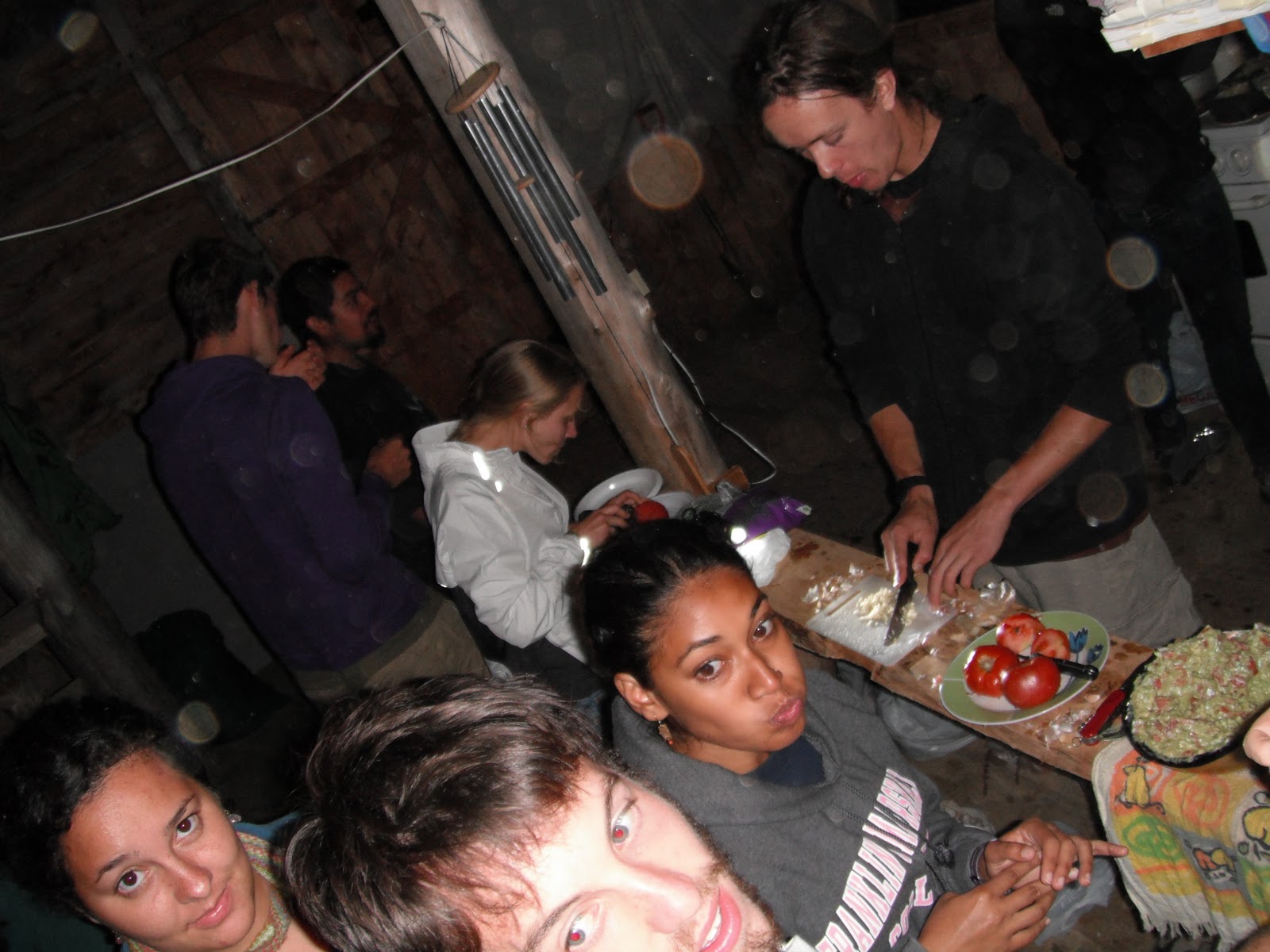
By the time we got to the cabin, it was already almost dusk and we had to make ourselves dinner. There was electricity in the cabin, but only in a few places, and there was no good light in the kitchen, so people started cooking by headlamp! And, since there wasn't enough cutlery, we were chopping vegetables with pocket knives. Classic OTS moments.


Inca organized the dinner, and with help from about 10 other people cooked pasta with a spicy mushroom-tomato sauce and a salad with almonds and mustard dressing. Francesca also made approximately 3 or 4 pounds of guacamole, which was AMAZING. Overall, dinner was a huge success and everyone was happy.


After dinner we hung out all night listening to music, and eventually went to sleep. There was one real bed and one mattress on the floor, so almost everyone was scattered throughout the house in sleeping bags. Because we were at a higher elevation, it got cold at night, but not as uncomfortably cold as Cuerici. In the morning we made breakfast, and then some people hiked to a lake to swim.

Waking up in sleeping bags!


Making breakfast in the morning
I stayed back in the cabin with some other people because you had to pay to swim in the lake and I was tired from staying up late and waking up cold a few times the night before. We had a really pleasant day in the cabin hanging out, doing nothing in particular. I also took the best nap of my life with Tessa and Chesca in the one bed in the cabin, since we had all slept on the floor the night before.

Hanging out in the cabin

Patrick napping in the hammock
The bed where I took my excellent nap!

We left around 2, and went back to San Jose to start our second (and last) week at CRLA!

San Jose, pt. 2: Intensive Spanish

The first week of Spanish classes at CRLA were a whirlwind of activities. We visited the Universidad de Costa Rica to interview students there about the college experience here, which included getting lunch and ice cream with my classmates and professor, learned a lot of grammar, gave two 20-minute presentations, and wrote two 2-page essays. On Tuesday we met up with Miguel, Chesca, and Manny for lunch, who we hadn't seen in (GASP) four days since they are native Spanish-speakers and therefore exempt from the CRLA program. I also saw a movie (No Strings Attached, or Amigos con Derechos in Spanish) in the theater at the mall, which costs only 1,000 colones ($2) on Wednesdays, celebrated St. Patrick's day despite the fact that my host mom didn't know where Ireland is (she thought it was part of the US!), found and brought business to a self-serve frozen yogurt place near the University (the only one I have seen in CR!), and attended a cooking class where I learned how to make delicious tortas de yuca.
Some amigas celebrating St. Patrick's day with green beer at Caccio's our favorite bar
One of our 20-minute oral presentations for Spanish class was about our experience with our Costa Rican family, so I also had the pleasure of learning a lot more about mi familia tica during my first week at CRLA. My host mom, Maria Eugenia, is in her 60s and is the youngest of 19 siblings. Her family is huge (needless to say), and pretty much everyone in the neighborhood of Cedros, where my host house is located, is related to her in some way or another. She has lived in the same house for her entire life, and seen the city change around it for the past 60 years, which is amazing. She and her husband Francisco have two daughters and had one son who passed away more than ten years ago.

Me, Maria, and Francisco
Their oldest daughter, Ivania, lives across the street and has two daughters of her own (11 and 14 years old). Ivania is Maggie's host mom, and also has enough space in her house to host up to three additional CRLA students. We all have dinner together about twice a week. Their younger daughter, Carolina, got married recently and lives with her husband, who is a doctor. I stay in Carolina's former room. Our family also includes two pet birds, a parrot named Lola that does great human impressions, and a parakeet named Pepe. Maria and Francisco love Pepe very much and let him sleep in their bedroom in a box with a blanket, out of the cage. Sometimes Maria even lets him sleep against her chest in the bed!

Mary, my host "sister," holding Pepe the parakeet
Maria and Francisco are both retired, but Maria volunteers at the hospital a few days a week and is also very actively involved in her church (especially now since it's Lent!). Francisco spends most of his time in the garage downstairs, working on his motorcycle. He is deaf in one ear and watches TV with the volume very loud because it's difficult for him to hear otherwise. They are a very funny couple and bicker with each other playfully. Maria is also an excellent cook, and always serves me and Mary delicious food. She doesn't usually eat with us, but serves us at the table and sits with us while we eat. At first I thought this was weird and a little overly formal, but I got used to it quickly and wasn't bothered by her eating habits because it was nice to have her company and conversation at the table whether she was eating or not. A typical breakfast in our house takes place around 7:30 am and includes coffee, orange juice, bread with jelly, fruit, and sometimes cereal. In Costa Rica you can buy pre-toasted bread, which I think is kind of funny, and sometimes we have that for breakfast but Mary and I don't like it too much because it's very dry.

Breakfast at the dining room table. Mary didn't want to be in this picture... oops
Dinner is always different, but usually includes salad, rice, plantains, and chicken. We've had soups, arroz con pollo, tacos, chalupas, and other wonderful dishes that Maria prepares. One day we had to walk home from school because it was rush hour and all the buses were full, and after almost an hour and a half of walking Mary and I ate an entire pot of linguini with cheese. It was so delicious that we high-fived after we finished dinner. Maria laughed because she said we left no evidence that she had cooked. In short, my homestay is great.
The living room of my host family's home

San Jose, pt. 1: Settling in

Thursday 3/10 we left Palo Verde and arrived in San Jose after about five hours on a bus. First we stopped at the OTS office at the University of Costa Rica. There we split up into two smaller buses based on where our host familys' houses were located, and loaded our luggage in the order in which we were going to be dropped off so that it would be easier to unload. When we left the OTS office, we said goodbye to our professors and TA, who we wouldn't see again until our next field station! We took our two smaller buses to the Costa Rican Language Academy, where we would be taking classes for the next two weeks, for orientation in the afternoon. We receieved some information about the school, a check for lunch money for the next two weeks (since the OTS program is supposed to include food, but our host families only serve us breakfast and dinner), a list of everyone's host family's phone numbers, and a map with everyone's houses marked on it. The OTS staff had also told the CRLA directors that it was Tom's birthday, so at the end of orientation they brought him a cake and we all sang happy birthday. Our last activity was oral evaluations of our Spanish skills so that the professors could place us into the appropriate level classes. Then we got back into our buses and headed out to our homestays!

Celebrating Tom's 21st (again) before splitting up for the first time since January!
At the beginning of the program I was nervous about the homestay, worrying that it would be awkward or uncomfortable. However, after three weeks of being unfomfortable in Palo Verde and half a semester of time with amazingly nice Costa RIcans, I was actually looking forward to my homestay. I was the seventh person to be dropped off in my bus, so I got to see six other people's houses from the street before I arrived at mine. My host mom greeted me with a hug and a kiss and helped me carry my things upstairs, since the main living space of the house is on the second floor. She showed me my room (which has a private bathroom!), where I left my things while we talked a bit and she showed me the rest of the house. I found out a few minutes after arriving that I also had a host sister, another student at CRLA who had been living with my host parents for two and a half months already. Her name is Mary, and she's from the suburbs of Chicago, and was studying Spanish in her year off after high school. We ate dinner together and then sat in the living room talking for a bit. I was not in the best shape that day... I was tired from lack of sleep the night before, still dehydrated from my sunburn, had started peeling all over my legs and back, and noticed earlier in the day that my right ankle was swollen for no reason. (I hadn't hurt it or gotten stung by anything; it was just retaining water, and it stayed like that for three days before the swelling started going down. No one could figure out what was causing it. Our best guess was that it had something to do with being dehydrated because of my sunburn.) I ended up going to sleep around 9 pm, and it felt like a huge luxury to have a whole room to myself with a real mattress, after sleeping on bunk beds in shared rooms since I'd arrived in Costa Rica.

The next morning I had my first day of school at CRLA, and after showering and eating breakfast with my host mom, Mary showed me the bus stop and which buses to take to get to school. We also met up with Maggie, who lived right accross the street from me; my host mom's daughter is in her thirties and has her own family in which she hosts students from CRLA. So technically I think that made me Maggie's host aunt. Haha. All three of us took the bus to school together, and on the way there we discovered that sereral other OTS students were on the same bus route as us. When we got to CRLA we split up into our classes, which had 2-4 students in each class. I was placed in an advanced class with Nate, Ashley, and Matt, and our professor was young graduate of the Universidad de Costa Rica named Rebeca. We reviewed the course syllabus, and then started studying some grammar. All four of us in my class had taken Spaish before, but not practiced it in at least two years, so we were all in need of similar refreshers, which worked out nicely. A bunch of us went to a soda (what they call small restaurants here in CR) for lunch that Rebeca recommended. In the afternoon we discussed our goals for the class and then had relatively unstructured conversation for the rest of the day. I really liked the setup of the class immediately, because it was based around strengthening speaking skills which were really rusty for me. Rebeca also told us about some activities that were going on in San Jose that weekend, and what were some cool places in the city that we should check out. Spanish classes at CRLA were definitely off to a good start.

After school, we went to the bank to cash our checks and then took the bus home for dinner. Maria, my host mom, had cooked a delicious meal of chalupas with tuna, and Mary and I each ate several. Mary had told me the day before that Maria is an excellent cook, and I was qucikly learning that this was true. After dinner we had plans to meet up with the whole OTS group at Mall San Pedro, which was a few blocks away from CRLA so we all knew how to get there by bus. We attempted to find a bar together, but also discovered how difficult it is to keep a group of 28 people together in a college town without cellphones. We unintentionally split up into several smaller groups within the first 15 minutes of finding the Universidad de Costa Rica, which is where our professors had advised us to go to look for bars. The group I was in ended up making it to Caccio's, which was the bar we were looking for in the first place, but most people had already dispersed and gone elsewhere by the time we found it. We hung out there for a while and unexpectedly saw the German jaguar researcher that we had met at Las Alturas a month earlier, which was random. Later we moved on to another bar where we thought some of our friends had gone into, but they were already gone. Everyone was still tired from traveling to San Jose and slightly agitated about managing our large group of people, so we ended up leaving the second bar pretty quickly and taking taxis back to our houses.

Luckily, the weekend got much better from there! Maggie and I took the bus together in the morning to meet Tessa, Rukhshaha, and Francesca at the mall. From there we took a bus into downtown San Jose to check out an art festival that Rebeca had told my Spanish class about the day before. With a little help from my map, we found our way to the series of parks north of city center where the festival was taking place. We started in Parque Morazan, which had live music performances all day long. When we were there, we saw the Banda de San Jose which played traditional Latin dance music. A lot of the older people in the audience danced together to the music, which was adorable to watch. After we hung out there for a while, we walked through Parque Espana, which was filled with booths selling used books. I bought a copy of Love in a time of Cholera in Spanish, which was an ambitious purchase but an exciting one. We then walked through the Ministry of Culture, which was having some theatrical performances for children at the time. Finally we arrived at Parque Nacional, which was filled with art pieces made of recycled materials, craft booths, and food stalls. We saw a crazy parade or people in giant masks, live storytelling, music, and even a dunk tank. The festival was amazing and we were really glad that we had the opportunity to be in San Jose during it.

The bandshell in Parque Morazan, where we saw several musical performances
For lunch we headed down to the Avenida Central. Rukhshana was really craving hamburgers after eating rice and beans for so long, so we found a place called Hamburger Factory and decided to eat there. I thought the burgers were just OK, but everyone else seemed pretty happy to be eating typical US food for a day. 

My enthusiasm may not have rivaled Rukhshana's, but the fries were good!
 While looking for a place to eat we passed by an artisan market, and decided to return there after lunch. I was in desperate need of a purse, since I had only brought my backpack to Costa Rica with me and had nothing smaller to carry my wallet in. I found a bag for 4,000 colones ($8), and for the first time didn't have to rely on someone else to carry my things for me! Leaving the market we ran into Stephanie and Liz, who had just visited the National Museum and were headed to the Jade Museum. We wanted to go back to the Minsitry of Culture to go to an African dance workshop, but we told them were we were going and decided to meet up after we had finished our respective activites. The dance workshop actually turned out to be a performance, so we didn't get to learn any African dance. However, the performance was AMAZING and we had a really fun time watching it anyway. Liz and Stephanie found us just as the show was ending, and we decided to look for the National Theater, which my teacher had told me was the most beautiful building in all of San Jose. We got some mango ice cream on the way, and then found it relatively easily. Although it's one of the fanciest buildings in the city, tickets to shows were only 5,000 colones ($10) each, so we all bought tickets to see a Flamenco performance that night at 8 pm. We headed home to eat dinner and get changed, and then met back at the theater at 7:30. The theater was beautifully lit up and all of the people were dressed nicely. After looking around for a bit we went to the entrance and handed our tickets, but were told that we had to go around the back. Rebeca had told me in class that when the theater was first built in the 1800s, they made a seperate entrance for unmarried women and divorcees, since they had essentially the same social status as prostitutes and were too frowned upon to go through the main entrance. Today, the only way to get to the upper level of seats is through that entrance, which we affectionally started calling the prostitute entrance. We went through the back and found our seats with little difficulty, and enjoyed a show of decent dancing and excellent flamenco music. 

Foolishly trying to enter through the main lobby, which is beautiful!
In our rightful place at the back entrance
Inside the theater! I got in trouble for taking pictures.
We were expecting a more traditional flamenco, but it was actually like a fusion with modern dance, and the story was a little difficult to follow in Spanish, but for $10 it was a cool experience to have. After the show, we considered trying to find some of our friends who had gone out to a bar, but decided instead to go home and go to bed early.

The next morning we went met for lunch in the Avenida Central, and then went back to the festival. Rather than trying to see and do a lot, like we had the day before, we hung out in Parque Morazan, listening to music and chatting. We did make a point to check out the graffiti exhibition, though, which had been a work in progress throughout the weekend with several artists contributing to different parts of a blank white wall. It was amazing how much they had done in just two days!
Some of my favorite graffiti pieces at the festival

We lingered in town until the late afternoon, and then headed back to our houses to have dinner with our host families. I spent the night writing my first essay for Spanish class, which was due Monday morning. I also got to see pictures from a rafting trip Mary had taken that weekend, which looked awesome! Overall my first weekend in San Jose was excellent, and when I went to bed (at 9 pm again... I am beginning to notice a trend, haha) I was excited to start my first full week of Spanish classes and get to know the city better. 

Palo Verde, pt. 6: Wrapping up

Our midterm exams were on Monday 3/7, so Sunday we had a day with no activities scheduled so that we could study. I had a relaxing day reviewing my notes and napping, since I had sustained a serious sunburn on my back and legs at the mangrove beach (they didn't tell us we were going to a beach, so I didn't have sunscreen!) and was dehydrated and tired. Luckily my generous friends applied aloe to me every now and then in return for my lending them anti-itch cream for bugbites and Neosporin for mysterious rashes... after three weeks of constantly sweating in Palo Verde, almost everyone had some sort of weird ailment. The next morning, we had our environmental studies exam, which covered all of the topics related to Costa Rican environmental policy, management, politics and economics that we had studied so far in the semester. The exam was three hours long, but most of us finished early and used the remaining time to study a bit more for our next test. In the afternoon we had the biology exam, which covered everything else from the first half of the semester. Luckily neither exam was too difficult, since the material we were responsible for knowing was very extensive. Overall I thoght they were both fair tests that we were prepared for.

All of our other final assignments were due the next day at noon, so after the exam Rukhshana and I walked down to the river to do our field notebook assignments. After our 30 minutes of observation and description were done, we hung out and watched the sun set, which was (as usual at Palo Verde) beautiful.


We came back for dinner, and then got to work on our other remaining assignments: insect identification and a plant taxonomy practical. I did all ten insects in one night, and it took me way less time than the insect IDs at Las Cruces, which I was very pleased about. Then I did our plant practical, which was creating a dichotomous key that could be used to identify ten plant species found at Palo Verde. After spending some time hanging out and chatting with my roommates (a very frequent occurrance for us), I went to bed feeling very productive since I had completed two exams and three assignments all in one day.

After lunch on Tuesday we received back the rough drafts of our IP writeups, and had one day to redo them. In the rough draft I had gotten all of the ideas down that I wanted, but still had to read a lot more literature that I didn't have time to get through while we were doing data collection and analysis. I spent the rest of the afternoon and the next morning reading and taking notes on about 20 additional papers, and then reworked my paper Wednesday afternoon. The final copies were technically due at 5 pm, but most people hadn't finished and our professors were pretty flexible about all things related to the IPs since we were so short on time. I had finished writing mine by dinner time, but then took a break to eat and proofread it after dinner. Since it was our last night in Palo Verde and also since the station was full of OTS directors for a meeting the next day, the kitchen staff slaughtered one of the cattle for us and had a giant barbecue complete with fresh meat, patacones (fried plantains), rice and beans, and, the unanimous favorite, (LOTS of) guacamole. It was a serious feast and felt like a celebration of all of the hard work we had been doing at Palo Verde. After dinner, the party continued; the next day was Tom's 21st birthday, but since we were spending most of the day on a bus and then dispersing to our homestays, we decided to celebrate the night before. Because the directors were staying in all of the buildings, we couldn't be loud there and went out to the pier to celebrate. We ran into another group of college students from the University of Florida who had been staying down the road from us for a week but we had never seen until that day. They were also leaving the next day and were celebrating their last night in Palo Verde, as well. The next morning, we all managed to wake up early, pack our stuff, and be on a bus by 8:30 am to head to San Jose, where we'd be spending the next two weeks.

Sunday, April 3, 2011

Palo Verde, pt. 5: A mangrove excursion

At 8 am on Friday, 3/4 we left Palo Verde for a trip to a mangrove forest! It took us several hours to get there, and then we hiked in through private property, ducking under barbed wire fences to cross some pastureland before arriving in the mangroves. It was amazing how quickly we transitioned from open fields to regular shrubs and trees on a forest edge to a full-on mangrove forest with almost exclusively mangroves growing there.

Mangroves are a paraphyletic group of trees that have all evolved adaptations to deal with high salt content in their water, poor nutrient availability in their soil, and occasional to frequent flooding caused by tidal changes. Mangroves live in coastal tropical and subtropical regions, in places where salt marshes would exist in temperate zones. The first type we encountered was the black mangrove, which is the least salt-tolerant species that we saw and thus lives farthest inland. The trees look relatively normal, except for the fact that they send up short above-ground roots called pneumatophores which help with gas exchange when the tide comes in and the area is flooded.

Pneumatophores covering the ground of the black mangrove forest
Also, they deal with high salt levels by excreting it on the bottoms of their leaves! They excrete so much salt that you can see the crystals on the bottom, and if you lick the leaves you can taste it. Tom described it as having the same amount of saltiness as a pretzel, which I would agree with.

Salty leaves of the black mangrove trees
After a brief introduction to the black mangroves, Mau gave us some time to sit in the forest and observe our surroundings. We then talked about the main differences we noticed between the mangrove forest and the other tropical forests we'd seen, and determined that the most striking one was the lack of biodiversity in the mangroves. They are literally the only plant species in sight, with no groundcover or subcanopy growth whatsoever. The only animals we saw were fiddler crabs, which burrow holes into the salty mud... none of the birds, lizards, frogs, or monkies that we'd been seeing at other sites.
One of the many crabs we saw
Aside from a few mosquitoes (which are apparently much more abundant in the wet season) and some termites, we didn't even see any insects! Also, the forest structure is much simpler with a relatively uniform canopy height and really no other layers of foliage.

Nothing but black mangroves, as far as the eye can see.
We kept walking towards the coast (over the pneumatophores, which make the mud feel bouncy when you step on them!) until we got to the red mangroves. Because they are more salt-tolerant, they live closer to the water, which means the mud there is REALLY wet! This was one of the first hikes that I felt like my rubber boots were truly necessary, and I was glad I had worn them. There were some places where you could unintentionally sink in up to your knee in mud, and that happened to a few people while we were entering the red mangrove zone. Red mangrove is the type of mangrove that you probably think of when you think about mangroves in general, because they have the very distinctive prop roots that are easy to remember.

Red mangroves
Hiking through a red mangrove forest is not an easy task, since on top of the mud you have to climb over, under, and around all of the crazy above-ground roots of the trees. When we had gotten far enough into the forest, we stopped for lunch, which we had packed in with us that morning. We were all hot and sweaty, but it was pretty neat to eat a sandwich while perched five feet above the ground on a giant tree root.
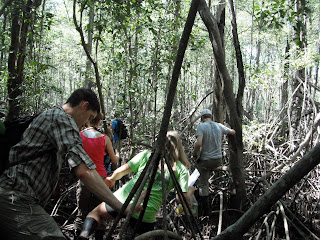
Hiking through the red mangroves felt like spy training in the movies when you have to cross a room secured with laser beams, you know?
After lunch we talked about the red mangroves a bit, and then split up into small groups to do an activity. Our professor had brought a lengthy review article about mangrove ecology, and split it up into sections so that each group could read a small part and then present it to the class. My section was about the importance of mangroves in the fishing industry, since many young fish hatchlings use mangrove forests as a sort of nursery, since the water is calm and protected and there is an abundance of food. After discussing the article, we all wrote down some short ideas about how to restore mangrove forests, since many of them have been destroyed worldwide for coastal development and flood management, and then started to head back because the tide was coming in! It started while we were presenting our article sections, and happened really fast. Again, I was glad to have my rubber boots! We all trekked out through several inches of water, which made the mud even sloppier.

The tide coming in and flooding the forest!
At one point my foot sank in to below boot level, so my boot filled up with muddy water that splashed all over my pants when I tried to dump it out. By the time we made it back to the bus, I was basically completely soaked, but still in awe of the mangrove forests. It was an amazing ecosystem to see, and unlike anything I have ever experienced before, in Costa Rica or elsewhere. I changed into my extra pair of shorts on the bus, and we drove another hour and a half to get to the field station where we were spending the night.

We arrived at 5, and discovered that we were staying approximately 4 blocks away from a beach! Mau didn't tell us this in advance, so of course none of us had brought bathing suits or other beach-appropriate things. We were so excited to be at the beach (for the first time since we'd arrived in Costa Rica!) that we all went anyway, me in my hiking boots since I didn't even bring flip-flops for the one night trip.
First glimpse of the beach across the street from our station
Sunset!

Sunset + amigas!
We went swimming in our clothes right as the sun was setting, and swimming out about 100 feet in the calm cove we could actually see the sunset which you couldn't see from land. The water was warm, the sky was beautiful, and we were all incredibly happy. Going to the beach is almost always relaxing, but the stress of our independent projects and the surprise of not knowing we were going to the beach made our 30 minutes in the water that much more enjoyable.

We returned to the station for dinner as it was starting to get dark. I had only brought one extra pair of shorts since the trip was so short, which I had worn swimming, and my field pants were still soaked with muddy water from the mangroves. I was mentally readying myself to wear a bedsheet until my clothes dried the next day, but right before dinner Chesca lent me the shorts she had brought to sleep in. We were supposed to have a class that night, but our professors rescheduled it for the next morning so we had the evening free. Some people stayed up to have a fiesta, but after sitting around and talking for a bit I was completely exhausted and went to bed at 9 pm. I had been awake since 4:45 am the day before, working on IP things the whole time and then leaving straight for the mangroves without sleeping the night before. Going to bed that night felt amazing, and I slept for 10 glorious hours.

The next morning we had a lecture after breakfast on mangrove ecology with a visiting professor who had studied mangroves extensively. Much of the class was a review of the things we had seen the day before, but I enjoyed it because I found it all very interesting the first time. After class we had free time until lunch, so of course we went back to the beach. My pants were still not dry from the day before, so I had nothing to change into if I went swimming. I enjoyed the beach from dry land, though, and hung out in the sun for a few hours, heading back to shower before lunchtime.

Back to the beach in the AM!
Strollin'
Quite content to be at the beach
On the way back to Palo Verde, we stopped at "Megafauna Park," which is basically a tourist trap on the side of the road somewhere near the coast. You pay admission to walk around a trail with giant cement sculptures of large animals of Costa Rica, both alive and extinct. It was kind of a joke thrown in by Mau since we had spent so much time talking about gomphotheres, a group of extinct megafauna, in Palo Verde. We spent about two hours there looking at the poorly-made, disproportionate, and probably scientifically inaccurate sculptures, often times imitating their expressions ourselves since they all looked slightly crazed.
The T-rex that guards the entrance to Megafauna Park
Monkey face?

Tessa and an anteater
Patrick imitating some large animal that I don't recognize, and doing a fantastic job of it. Tyra would be proud!
This guy was FIERCE.

Patrick next to the giant ground sloth, which was grossly disproportionate!
Another crazed-looking cement statue
There was also a small insect museum attached to the gift shop, which was interesting because the insects were arranged in interesting patterns and hung like pieces of art.

Insect art

After our jaunt with the poorly-recreated megafauna, we finished our bus ride back to Palo Verde, arriving just in time for dinner.